


Tibetan Bracelet Color Meaning: What Red, Black, White, Yellow, Green and Blue Stand For

Quick answer: In Tibetan Buddhism, bracelet colors come from the same five-color system used on prayer flags: blue (sky and space), white (air and wind), red (fire), green (water) and yellow (earth). Red is the most common choice for protection and blessings, black for grounding and warding off negativity, and a five-color string for balance. Pick the color that matches your intention, then wear it as a daily reminder of that intention.
Shop the collection: Tibetan Bracelets – ships within 24–48 hours, free shipping on orders $49.99+, 30-day returns.
In this guide
- Where Tibetan bracelet colors come from
- Red Tibetan bracelet meaning: protection and blessings
- Black Tibetan bracelet meaning: grounding and warding off negativity
- White Tibetan bracelet meaning: purity and a fresh start
- Yellow Tibetan bracelet meaning: wisdom and abundance
- Green Tibetan bracelet meaning: balance and compassion
- Blue Tibetan bracelet meaning: calm and clear communication
- Five-color (multicolor) bracelets: balance of all elements
- How to choose the right color for you
- How to wear and care for a Tibetan bracelet
- Frequently asked questions
Where Tibetan bracelet colors come from
Tibetan bracelet colors are not random fashion choices. They borrow from the five-color scheme seen on Tibetan prayer flags, which are traditionally hung in a fixed order: blue, white, red, green and yellow. Each color stands for one of the five elements and is linked to the Five Pure Lights of Vajrayana teaching.
Because the same palette appears on temples, prayer wheels and monks' robes, a color on your wrist carries a familiar meaning for anyone who knows the tradition. That is why many people choose a Tibetan bracelet by color first and by material second.
Red Tibetan bracelet meaning: protection and blessings
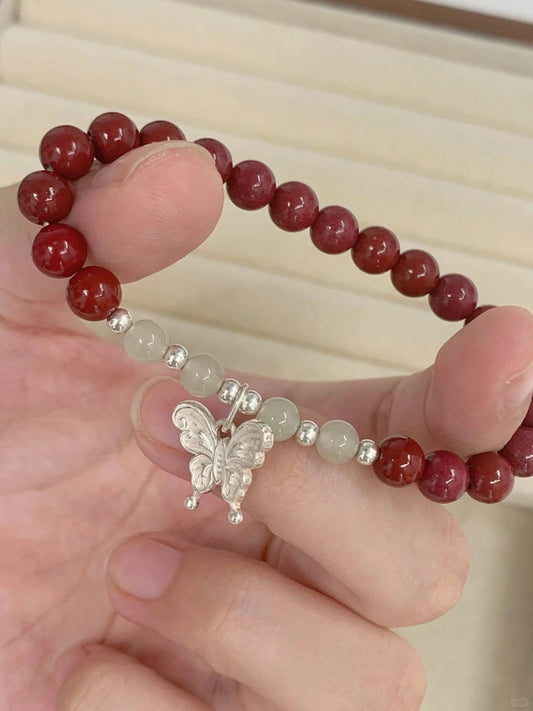
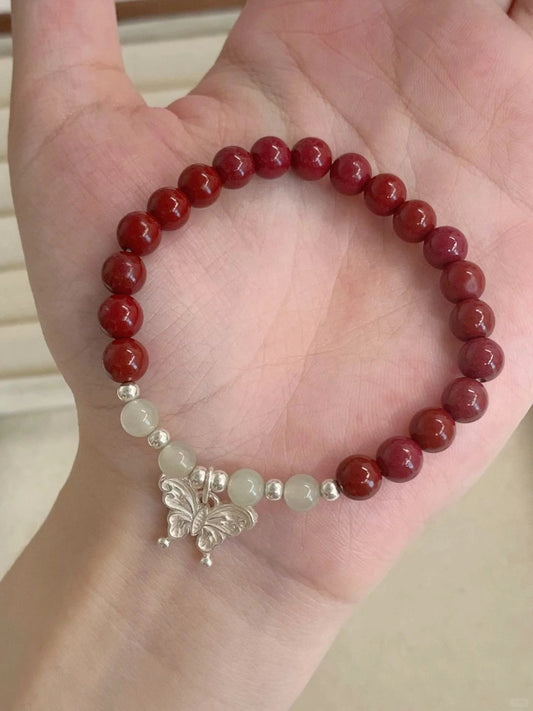
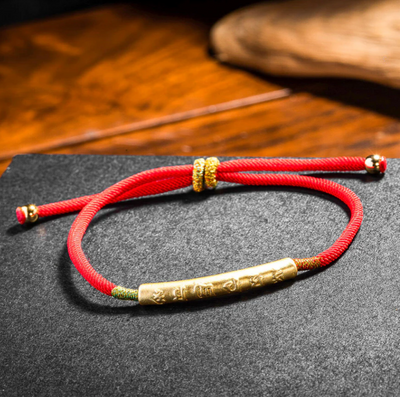
Red represents fire. In Tibetan practice it is associated with energy, transformation and protection, and it is also the color of the robes worn by many monks. A red string bracelet is often tied by a lama or a family member as a blessing and a protective token.
Choose red if you want a bracelet that feels protective, or if you are entering a demanding year. Red knot bracelets and Om Mani Padme Hum bracelets are the classic red styles.
Black Tibetan bracelet meaning: grounding and warding off negativity
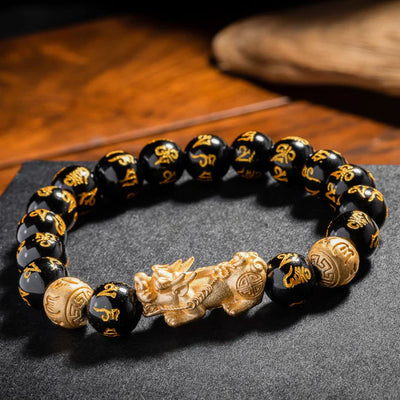
Black is not one of the five prayer-flag colors, but black cords and black stones are common in Tibetan jewelry. They are usually worn for grounding and for keeping unwanted energy at a distance. Black also pairs easily with everyday clothes, which is why it is a popular choice for men.
Black obsidian beads, black knot cords and dark wood malas all fall into this group.
White Tibetan bracelet meaning: purity and a fresh start
White represents air and wind. It is linked to purity, clarity and new beginnings. A white bracelet suits someone starting a new chapter, such as a new job, a move or a new spiritual practice.
White jade, white bodhi seed and white cord bracelets carry this meaning.
Yellow Tibetan bracelet meaning: wisdom and abundance
Yellow represents earth. It is associated with stability, generosity and the abundance that comes from solid foundations. In meditation teaching, yellow is said to transform pride into the wisdom of equality.
Gold-tone and yellow cord bracelets are often chosen for career growth and steady prosperity.
Green Tibetan bracelet meaning: balance and compassion
Green represents water. It stands for harmony, growth and compassion, and is linked to the Buddha Amoghasiddhi. Green suits anyone who wants more calm in their relationships or their daily routine.
Green jade and turquoise-green beads are the usual choices.
Blue Tibetan bracelet meaning: calm and clear communication
Blue represents sky and space. It is associated with openness, calm and clear expression. Blue is a good choice if you want to speak more clearly or stay calm under pressure.
Lapis lazuli and blue cord bracelets fall into this group.
Five-color (multicolor) bracelets: balance of all elements
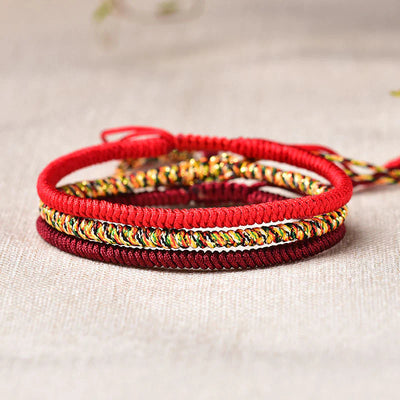
A bracelet woven from all five colors represents balance between every element. Five-color strings are often given at festivals and blessings, and they are a safe choice if you are unsure which single color fits you.
How to choose the right color for you
Start with your intention, then pick the color that matches it:
- Protection or a hard year ahead: red or black.
- A new beginning: white.
- Career and steady abundance: yellow or gold.
- Calmer relationships: green.
- Clear communication: blue.
- Overall balance: five colors.
Then consider material. Cord bracelets are light and adjustable, beaded bracelets add the meaning of the stone, and copper or brass pieces add weight and durability. You can read more in our guides to Tibetan Buddhist bracelet meaning and Tibetan copper bracelets.
How to wear and care for a Tibetan bracelet
Many people wear a Tibetan bracelet on the left wrist, the hand traditionally associated with receiving, but there is no strict rule. Wear it daily as a reminder of your intention rather than as a lucky charm that works on its own.
Keep cords away from perfume and long soaking, let them dry flat if they get wet, and wipe beads with a soft cloth. If a blessed cord breaks, it is traditionally seen as having done its job, and you can replace it with a new one.
Frequently asked questions
What does a red Tibetan bracelet mean?
Red represents fire in the Tibetan five-color system. It is associated with protection, energy and blessings, and red string bracelets are often tied as protective tokens.
What do the five colors of a Tibetan bracelet mean?
Blue stands for sky and space, white for air and wind, red for fire, green for water and yellow for earth. Together they represent balance between the elements.
Which Tibetan bracelet color is best for protection?
Red and black are the most common choices for protection. Red is linked to blessings and fire, while black is worn for grounding and keeping negativity away.
Which wrist should I wear a Tibetan bracelet on?
Many people choose the left wrist, which is traditionally associated with receiving, but there is no strict rule. Comfort and daily wear matter more.
Can anyone wear a Tibetan bracelet?
Yes. You do not need to be Buddhist. Wearing one respectfully, as a reminder of compassion and intention, is welcomed in most Tibetan communities.
Note: The traditions described here are shared for cultural and personal-reflection purposes. Jewelry is not a substitute for medical, financial or professional advice.
Further reading
- Prayer flag – Wikipedia: the five colors and the elements they stand for, with cited sources.
- Five Pure Lights – Wikipedia: the Vajrayana teaching behind the five-color scheme.
- Om mani padme hum – Wikipedia: the six-syllable mantra often printed on Tibetan bracelets.
Shop the pieces from this guide
Sample Image Gallery