

Tibetan Bracelets for Men: Styles, Meanings and How to Choose the Right One

Quick answer: The best Tibetan bracelets for men are usually dark knot cords, mantra cuffs, dzi bead bracelets, wooden or obsidian malas and copper bangles. Each carries a meaning: knot cords stand for protection and blessings, the Om Mani Padme Hum mantra for compassion, dzi beads for good fortune, and malas for focus and meditation. Pick the meaning that fits your goal, choose a wrist size about 1–2 cm larger than your wrist for beads, and keep to dark or metal tones if you want it to work with everyday clothes.
Shop the collection: Jewelry for Men – ships within 24–48 hours, free shipping on orders $49.99+, 30-day returns.
In this guide
Why Tibetan bracelets suit men
Tibetan bracelets are built from cord, wood, stone and metal, so they look rugged rather than delicate. Their meanings, such as protection, focus and resilience, also appeal to men who want jewelry with a purpose rather than pure decoration. Many styles are adjustable, which makes sizing easy for larger wrists.
The main styles and what they mean
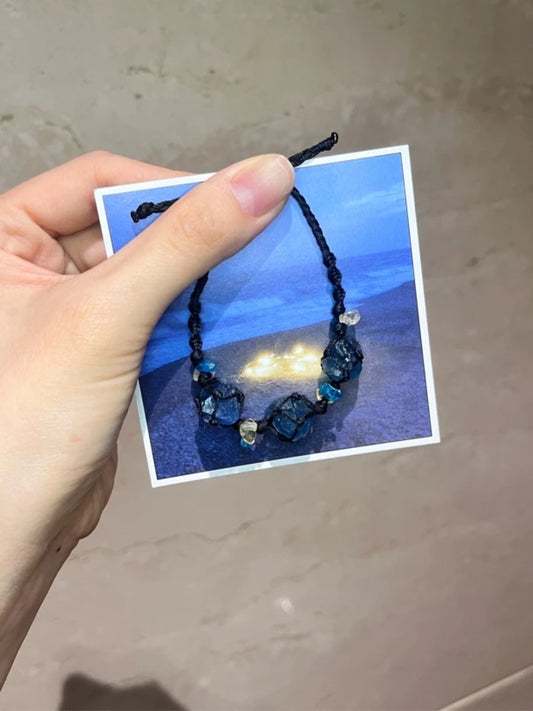
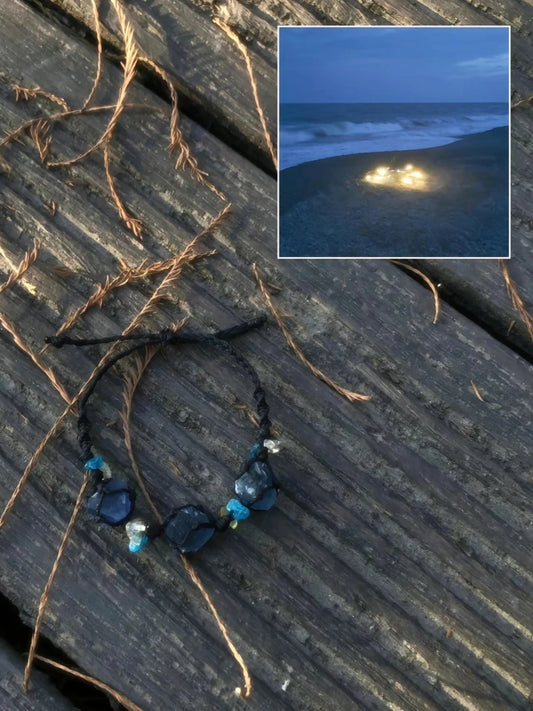
- Knot cord bracelets: hand-tied cords, often red or black, worn for protection and blessings. Light and easy to wear every day. See our guide to the endless knot.
- Mantra cuffs and rings: metal pieces engraved with Om Mani Padme Hum, the mantra of compassion. Read what Om Mani Padme Hum means.
- Dzi bead bracelets: patterned agate beads, a traditional Tibetan symbol of good fortune. The number of "eyes" carries different meanings; see how to wear dzi beads.
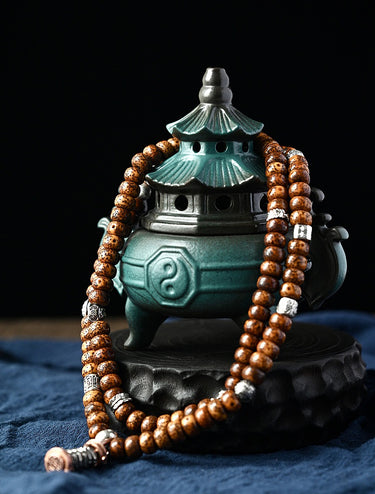
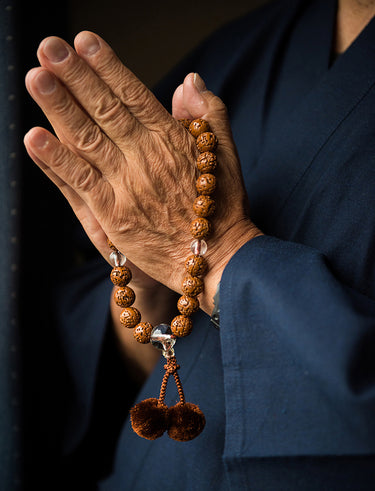
- Malas: wrist malas of 21, 27 or 108 beads used for counting mantras, linked to focus and calm. See why malas have 108 beads.
- Copper and brass bangles: solid, weighty pieces with Buddhist symbols. See Tibetan copper bracelets.
Choosing by goal
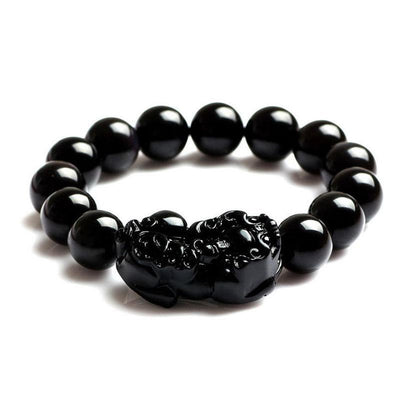
- Protection or a tough year: black or red knot cord, black obsidian beads.
- Career and good fortune: dzi bead or gold-tone mantra cuff.
- Focus and stress control: wooden or bodhi seed mala.
- A gift for a father or partner: copper bangle or mantra cuff, which feel substantial and last for years.
How to size a Tibetan bracelet for men
Measure your wrist just above the wrist bone with a soft tape or a strip of paper. For beaded bracelets, add about 1–2 cm (0.4–0.8 in) so the beads sit comfortably. Most adult men's wrists measure 16.5–19 cm (6.5–7.5 in). Cord bracelets usually have a sliding knot, so exact sizing matters less. For solid cuffs, check the stated inner width and gently adjust the opening.
How to wear it with everyday clothes
- With a watch: wear a slim cord or mala on the other wrist, or next to the watch if it is light.
- At work: dark wood, black cord or a plain copper bangle stay understated under a shirt cuff.
- Stacking: combine one cord with one bead bracelet; two or three pieces is plenty.
- Which wrist: many people wear it on the left wrist, traditionally the receiving hand, but comfort matters more.
Wearing it respectfully
You do not need to be Buddhist to wear a Tibetan bracelet. Treat mantra pieces with care: take them off in the bathroom if you prefer, avoid placing them on the floor, and remember the meaning behind them. Many wearers find that is what makes the bracelet worth wearing.
Frequently asked questions
What is the best Tibetan bracelet for men?
Popular choices are black or red knot cords, Om Mani Padme Hum cuffs, dzi bead bracelets, wooden malas and copper bangles. Choose by the meaning that fits your goal and the style you will wear daily.
What does a Tibetan bracelet mean for a man?
It depends on the style: knot cords mean protection and blessings, mantra pieces mean compassion, dzi beads mean good fortune and malas mean focus and calm.
What size Tibetan bracelet should a man get?
Measure your wrist and add about 1–2 cm for beaded bracelets. Most adult men fall between 16.5 and 19 cm. Cord bracelets are usually adjustable.
Can I wear a Tibetan bracelet with a watch?
Yes. Wear a slim cord or mala on the other wrist, or next to a light watch.
Do I need to be Buddhist to wear one?
No. Wearing it respectfully as a reminder of its meaning is welcomed by most Tibetan communities.
Note: The traditions described here are shared for cultural and personal-reflection purposes. Jewelry is not a substitute for medical, financial or professional advice.
Further reading
- Om mani padme hum – Wikipedia: the six-syllable mantra found on many Tibetan bracelets.
- Dzi bead – Wikipedia: history and patterns of Tibetan dzi beads.
- Japamala – Wikipedia: how prayer beads and the 108-bead mala are used.
Shop the pieces from this guide


Sample Image Gallery