Amethyst Bracelet Meaning: History, Which Wrist and Care

Key takeaways
- An amethyst bracelet is made of purple quartz, the birthstone for February.
- The name comes from the Greek amethystos, "not intoxicated", from an old belief that the stone kept its wearer clear-headed.
- In crystal tradition, amethyst stands for calm, clarity and restful sleep. These are symbolic meanings, not medical effects.
- At Mohs 7, amethyst is durable for daily wear, but long, strong light and heat can fade or change its color.
- Natural amethyst shows small color variations; lab-grown and heated stones exist, so look for honest labels.
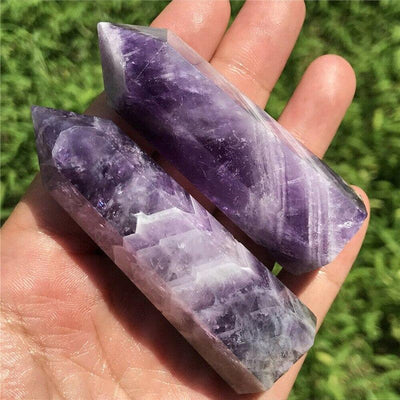
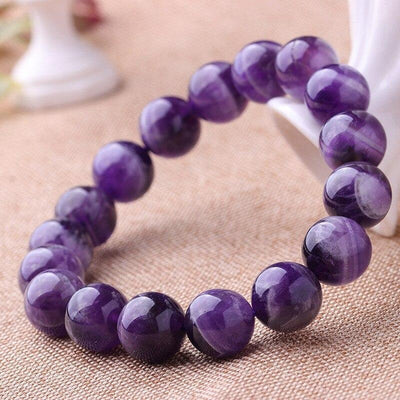
An amethyst bracelet is a string of purple quartz beads, and it is one of the most popular stones for calm and clear thinking. Amethyst is the purple variety of quartz. According to the Gemological Institute of America (GIA), it is the birthstone for February and has been admired by royal families in Europe and Asia.
This guide explains the amethyst bracelet in simple steps. First, you will learn what the stone is and why it is purple. Next, you will discover the story behind its meaning. Finally, you will get practical advice on wearing, choosing, stacking and caring for your bracelet.
Table of contents
- What is an amethyst bracelet?
- Why amethyst is purple
- History and the "not drunk" legend
- Meaning and symbolism
- Which wrist to wear it on
- How to tell real amethyst
- Where amethyst comes from
- Amethyst compared with other purple stones
- How to choose an amethyst bracelet
- Stacking and pairing
- Care and color protection
- Birthstone and gift ideas
- Amethyst in feng shui and chakra practice
- Frequently Asked Questions
- References
What is an amethyst bracelet?
Most often, the bracelet is a ring of polished purple beads on elastic cord. Some styles use raw chips or faceted beads for more sparkle. Others mix amethyst with rose quartz, clear quartz or a Pixiu charm.
Technically, amethyst is quartz, the same mineral as clear rock crystal. The Jewelers of America gem guide explains that amethyst belongs to the quartz species, alongside citrine and rock crystal. In other words, every amethyst bracelet is made of one of the most common minerals on Earth, colored a beautiful purple.
As a result, the GIA today calls amethyst the most valued variety of quartz. It is beautiful enough for crown jewels, yet affordable enough for everyday jewelry. That balance is a big reason why amethyst is such a popular first crystal.

Why amethyst is purple
Surprisingly, scientists still discuss the exact cause. According to EarthSky, some researchers link the purple color to iron, while others point to manganese or other factors. Most experts agree that trace iron plus natural radiation in the earth plays a key role.
Meanwhile, the color range is wide, too. Amethyst can be pale lilac or deep purple. In addition, some stones show red or blue flashes. Generally, even, rich purple without brown tones is the most prized color.
Heat changes amethyst
Interestingly, heat can change amethyst's color for good. The GIA notes that heat treatment results in a permanent color change, and some amethyst turns yellow, becoming citrine. In fact, the GIA citrine description explains that most citrine on the market comes from heated amethyst.
Does amethyst fade?
Yes, it can. EarthSky reports that amethyst is very sensitive to heat and that its violet color may fade over time. So, as a simple habit, keep your amethyst bracelet out of strong sun and away from heat.
History and the "not drunk" legend
Indeed, amethyst has one of the most fun name stories in the gem world. The name comes from the ancient Greek amethystos, which means "not intoxicated". Britannica explains that it reflects an old folk belief that the stone protected its owner against drunkenness.
Moreover, the GIA history and lore page says early Greek legends linked amethyst with Dionysus, the god of wine, whom the Romans called Bacchus. Other legends said amethyst kept its wearer clear-headed and quick-witted in battle and in business.
For centuries, amethyst was also a luxury. According to the GIA, it was as expensive as ruby and emerald until the 19th century. Then large deposits were found in Brazil, and prices fell. As a result, an amethyst bracelet is now affordable for almost everyone.
- Ancient Greece: amethyst goblets and jewelry worn to stay sober.
- Medieval Europe: worn for a clear mind in battle.
- Romance: the GIA notes that St. Valentine was said to wear an amethyst ring carved with Cupid.
- Royalty: Catherine the Great of Russia loved amethyst necklaces.
Amethyst bracelet meaning and symbolism
Because of its history, an amethyst bracelet is mainly linked with clarity and calm. In modern crystal culture, people also choose it for meditation and rest. Here are the most common meanings.
- Clarity: the ancient idea of a clear head.
- Calm: the cool purple color feels peaceful to many people.
- Sober choices: some people wear it as a reminder to drink less.
- Rest: a popular bedside or evening stone in crystal tradition.
- Spiritual focus: linked with the crown chakra in yoga tradition.
Of course, these meanings are symbolic. An amethyst bracelet cannot treat anxiety, insomnia or addiction. If you struggle with any of these, please talk to a professional. Used honestly, however, a bracelet can be a helpful daily cue for the habits you want to build.

Which wrist to wear an amethyst bracelet on
First of all, there is no single rule. Many people wear an amethyst bracelet on the left wrist, which crystal tradition links with receiving. In this view, the stone's calm is "taken in". Others wear it on the right wrist to "send out" calm into their actions.
In practice, comfort matters most. If you wear a watch on your left wrist, you might prefer amethyst on the right. Either way, the key is to wear it where you will notice it.
- Pick your intention. Decide whether it reminds you of calm, clarity or rest.
- Choose a wrist. Left is the most common, but either works.
- Check the fit. Measure your wrist and add about 1–2 cm.
- Protect the color. Avoid saunas, hot cars and sunny windowsills.
- Rest the beads. Take it off for sports, swimming and cleaning.
How to tell real amethyst
Unfortunately, because amethyst is popular, glass and lab-grown stones are common. The GIA notes that amethyst can be manufactured in a lab as well as mined. However, lab-grown amethyst is still real quartz, but it should be labeled. By contrast, glass is a different material. Here are a few checks.
- Color zoning: natural amethyst often shows lighter and darker areas.
- Temperature: quartz feels cool at first touch and warms slowly.
- Bubbles: round bubbles under a loupe point to glass.
- Too perfect: large, flawless, perfectly even purple beads at a very low price deserve a second look.
For more detail, read our home guide on how to tell a real amethyst bracelet from a fake.
Where amethyst comes from
Amethyst is found on almost every continent. However, a few places supply most of the stones in jewelry today. According to the GIA, Brazil's huge deposits changed the market in the 19th century. In addition, the GIA 4Cs blog names Zambia as a major producer, with the Kariba mine as an important source.
Also, some sources have special stories. For example, Bolivia's Anahí mine produces ametrine, a rare crystal that is part purple and part golden. Meanwhile, the Four Peaks mine near Phoenix, Arizona, is known for deep purple color. Brazil also produces giant hollow geodes lined with crystals, some so large that a person can stand inside.
Moreover, single crystals can be enormous. The GIA notes that its museum once displayed a doubly terminated amethyst crystal that weighed 164 pounds. By contrast, the beads in a bracelet are tiny slices of the same mineral.
Does origin change the meaning?
No. In crystal tradition, the meaning comes from the stone's color and history, not from the mine. So, rather than chase a famous origin, focus on color, cut and an honest description.
Amethyst compared with other purple stones
Sometimes other purple materials look like amethyst. Here is a quick comparison to help you read listings with confidence.
| Material | What it is | How to spot it |
|---|---|---|
| Amethyst | Purple quartz, Mohs 7 | Cool touch, natural color zoning |
| Purple fluorite | A softer mineral, Mohs 4 | Often banded with green; scratches easily |
| Lepidolite | A lilac mica-rich stone | Pearly, flaky sparkle |
| Glass | Man-made | Bubbles, perfect color, warms fast |
In short, if a listing says "purple crystal" without a name, ask which material it is. A clear seller will tell you.
How to choose an amethyst bracelet
Next, the table below helps you match an amethyst bracelet to your style and budget.
| Feature | Options | What to know |
|---|---|---|
| Color | Pale lilac to deep purple | Deep, even purple costs more; pale stones look soft |
| Cut | Round, faceted, raw chips | Round for comfort; faceted for sparkle; chips for a natural look |
| Bead size | 6 mm, 8 mm, 10 mm | 8 mm suits most wrists |
| Cord | Elastic or braided | Elastic is easy; braided adjusts |
| Origin | Brazil, Uruguay, Zambia and others | Origin matters less than color and honesty |
Also, the GIA 4Cs blog notes that even fine amethyst can be modestly priced, because large deposits exist. So you do not need to overspend to get a lovely piece.
What size amethyst bracelet should I get?
First, measure your wrist snugly with a soft tape. Then add about 1–2 cm for comfort. Our bracelet size chart lists common sizes.
Stacking and pairing
In addition, an amethyst bracelet stacks beautifully. Purple pairs well with silver, white and pink. Here are popular pairings.
- Rose quartz: soft pink and purple; love plus calm.
- Clear quartz: a bright, simple look.
- Citrine: purple and gold; calm plus optimism.
- Black obsidian: a darker, grounding contrast.
- 7 chakra bracelet: amethyst already sits at the crown in chakra sets.
When stacking, however, keep softer stones such as obsidian or opal from rubbing hard against quartz. Otherwise, the softer beads may scratch over time.

Care and color protection
Amethyst rates 7 on the Mohs hardness scale, so it handles everyday wear well. Still, the GIA warns that harder gems such as rubies, sapphires and diamonds can scratch it. Follow these simple steps.
- Clean with warm, soapy water and a soft cloth, then dry well.
- Avoid heat, including steam cleaners, saunas and hot cars.
- Store away from strong sunlight to protect the color.
- Keep it apart from harder gemstones in your jewelry box.
- Check the elastic every few months and restring if needed.
In crystal tradition, people also refresh amethyst with moonlight or sound. Moonlight is a gentle choice because, unlike sunlight, it carries no fading risk. These rituals are optional, but many people enjoy them.
How long does an amethyst bracelet last?
With basic care, it can last for many years. Usually, the elastic cord wears out long before the stone does. Therefore, check the cord every few months. If it looks thin, shiny or loose, restring it. Also, store the bracelet flat rather than stretched over a jar or stand. That way, the cord keeps its spring for longer.
Birthstone and gift ideas
Above all, amethyst makes an easy gift. According to the GIA amethyst page, amethyst is the birthstone for February and the gem for the 6th and 17th wedding anniversaries. So it suits birthdays and anniversaries alike.
- February birthdays: a classic birthstone gift.
- 6th or 17th anniversary: a meaningful match.
- New job or exams: a reminder to stay clear-headed.
- Self-care: a calm evening ritual stone.
If you do not know the person's size, pick an elastic or adjustable style and include a short card explaining the meaning.
Amethyst in feng shui and chakra practice
For example, in feng shui decor, amethyst clusters and gem trees are often placed in study or rest areas for a calm, focused mood. An amethyst bracelet carries the same idea with you during the day.
Meanwhile, in yoga tradition, purple is linked with the crown chakra at the top of the head. That is why amethyst appears at the top of most chakra bracelets. To learn more, read our guides to the seven chakra colors and using amethyst for chakra balance.

Finally, remember that the best bracelet is the one you wear. Choose a shade you love, treat it kindly and let it remind you to slow down and think clearly.
Find your amethyst bracelet
Browse the Amethyst Purifying Bracelet, the Raw Amethyst Pendant and our full amethyst collection. Every listing names its material, and you can ask us about any stone before you buy.
Key Terms Explained
- Amethyst: The purple variety of quartz and the birthstone for February.
- Amethystos: Ancient Greek word meaning "not intoxicated", the source of the name.
- Color zoning: Lighter and darker areas of color within one stone.
- Heat treatment: Heating a gem to change its color; it can turn amethyst into citrine.
- Crown chakra: The energy center at the top of the head in yoga tradition, linked with violet.
Frequently Asked Questions
What does an amethyst bracelet mean?
In crystal tradition, an amethyst bracelet stands for calm, clarity and spiritual focus. Its name comes from the Greek for "not intoxicated". These are symbolic meanings, not medical effects.
Which hand should I wear an amethyst bracelet on?
Many people choose the left wrist to "receive" calm, while others choose the right. Comfort and visibility matter most.
Can I wear an amethyst bracelet in the shower?
It is better not to. Water and soap can weaken elastic cord, and hot water exposes the stone to heat. Take it off and wipe it dry instead.
Does an amethyst bracelet fade?
It can fade with long exposure to strong light or heat. Store it away from sunny windows and avoid saunas and steam cleaners.
Is an amethyst bracelet a good gift?
Yes. Amethyst is the February birthstone and the gem for the 6th and 17th wedding anniversaries, according to the GIA.
References
- GIA – Amethyst gem encyclopedia
- Britannica – Amethyst
- GIA – Amethyst history and lore
- EarthSky – The February birthstone is the purple amethyst
- GIA – February birthstone: amethyst
- Jewelers of America – Amethyst gemstone guide
- GIA 4Cs blog – February birthstone: amethyst
- UC Berkeley – Amethyst mineral notes
- GIA – Citrine description (heat-treated amethyst)
- Wikipedia – Amethyst
- USGS – Gemstones and the Mohs hardness scale
Meanings described here are cultural traditions and personal symbolism. Jewelry is not a substitute for medical, financial or professional advice, and no result is guaranteed.
Which bracelet is right for you? Picks from this guide


Sample Image Gallery