Bracelet Size Guide: How to Measure Your Wrist in 5 Easy Steps

Key takeaways
- Measure your wrist where you will wear the bracelet, usually just below the wrist bone, with a soft tape or a non-stretch string.
- Your wrist measurement is not your bracelet size. Add ease: about ½ inch for a snug fit, ¾ to 1 inch for comfort, and more for a loose drape.
- A 7-inch bracelet is widely treated as the standard size, and the most common advice between sizes is to size up.
- Bead bracelets need extra length when beads are large, because big beads take up room on the inside of the circle.
- Adjustable string and sliding-knot bracelets are the easiest choice for gifts when you do not know the wrist size.
Your bracelet size is your wrist measurement plus a little extra room, called ease. To find it, wrap a soft tape or a piece of string around your wrist, read the number, and then add about ½ to 1 inch depending on how loose you like your jewelry.
This guide walks you through the whole process step by step. First, you will learn how to measure correctly. Next, you will see how much ease to add for beads, string and chains. Finally, you will get a simple chart, gift tips and answers to common fit questions.
Table of contents
- Why fit matters
- What you need
- How to measure your wrist
- How much room to add
- Size chart
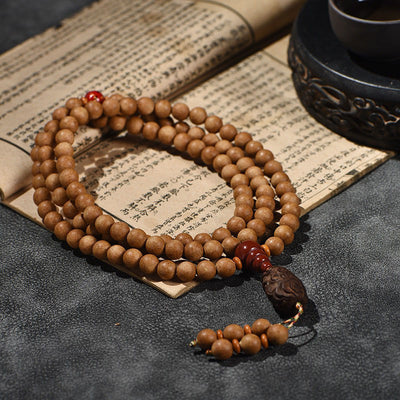
- Bead bracelets and bead size
- Fit by bracelet style
- Common measuring mistakes
- Sizing a bracelet as a gift
- When a bracelet does not fit
- Sizes for men, women and kids
- Which wrist to measure
- Quick checklist
- Frequently Asked Questions
- References
Why the right bracelet size matters
A bracelet that is too tight pinches and leaves marks. On the other hand, one that is too loose slides over your hand and catches on sleeves and bags. So a good fit is both about comfort and about keeping the piece safe.
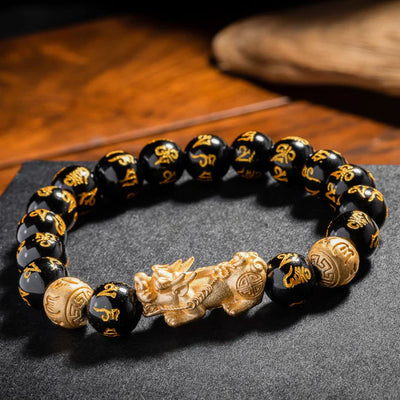
For feng shui and spiritual jewelry, fit matters in another way too. Many people wear a Pixiu, red string or mala bracelet every day as a personal reminder. In that case, it should feel easy enough to forget you are wearing it, yet secure enough that it stays put.
What you need to measure your bracelet size
You do not need special tools. In fact, most guides suggest one of these simple options.
- Soft tape measure: the kind used for sewing is ideal.
- String or paper strip: plus a pen and a ruler.
- Your own bracelet: useful as a second check.
However, choose your string carefully. Stretchy yarn or elastic gives a smaller reading than your true wrist, so use thread, ribbon or a paper strip that does not stretch. The Jewelers Mutual fit guide also mentions twine, dental floss or a strip of paper as handy options.

How to measure your wrist in five steps
Here is the method most jewelers recommend. It takes about one minute.
- Wrap the tape. Place it where you will wear the bracelet, usually just below the wrist bone.
- Keep it snug. The tape should lie flat on the skin without squeezing.
- Read the number. Note where the end meets the tape. If you used string, mark it, lay it flat and measure it with a ruler.
- Add ease. Then add the extra room that suits the bracelet style, as shown below.
- Match the chart. Finally, compare your result with the seller's size chart.
Note that guides differ slightly on where to place the tape. For example, Mint & Lily and Bulgari say just below the wrist bone, while the QVC wrist guide says just above it, toward the elbow. Either way, measure the spot where the bracelet will actually sit, and use the same spot every time.
Measure twice
Also, take the measurement two or three times. If the numbers differ, use the larger one. As the Monica Vinader size guide suggests, round up to the nearest centimeter rather than down.
How much room to add
This is the step most people miss. In other words, your wrist number is not your bracelet size. Instead, the bracelet needs a little extra length so it can move.
Sources agree on a range rather than one number. For instance, the MedicAlert sizing page adds a half inch, so a 6.5-inch wrist becomes a 7-inch bracelet. Similarly, Jewelers Mutual suggests adding ¼ to 1 inch, depending on how loose you want it. Meanwhile, QVC recommends ¾ to 1 inch for a comfort fit and 1¼ inches for a loose fit that drapes toward the hand.
| Fit you want | Add to wrist | How it feels |
|---|---|---|
| Snug | About ¼ to ½ inch (0.6–1.3 cm) | Stays in place; little movement |
| Comfort | About ¾ to 1 inch (2–2.5 cm) | Moves freely but stays above the hand |
| Loose | About 1¼ inch (3 cm) | Drapes down toward the hand |
| Stretch beads | About ½ inch, more for big beads | Rolls on easily; sits close |
| Cuffs and bangles | Follow the maker's chart | Bangles must pass over the hand |
So which should you choose? If you are not sure, the comfort range is a safe middle. Moreover, the most common advice across guides is simple: when in doubt, size up.
Bracelet size chart
Next, use this chart as a quick bracelet size reference. It follows the common pattern used by Brilliant Earth and other jewelers, where the bracelet size is the finished length of the bracelet.
| Wrist (inches) | Wrist (cm) | Suggested bracelet size |
|---|---|---|
| 5.0–5.5 | 12.7–14.0 | 5.5–6 in (XS) |
| 5.6–6.0 | 14.1–15.3 | 6–6.5 in (S) |
| 6.1–6.5 | 15.4–16.6 | 6.5–7 in (M) |
| 6.6–7.0 | 16.7–17.9 | 7–7.5 in (L) |
| 7.1–7.5 | 18.0–19.0 | 7.5–8 in (XL) |
According to Jewelers Mutual, a seven-inch bracelet is considered standard. Brilliant Earth also notes that the average women's length is about 6.5 to 7 inches, and about 7.5 inches for men. Still, these are averages, so your own measurement always wins.
For our own pieces, see the Mabge Shop bracelet size chart, which lists the sizes for our bead and string styles.
How bead size changes your bracelet size
Bead bracelets follow one extra rule. Because each bead takes up space on the inside of the circle, larger beads make the bracelet feel tighter at the same length.
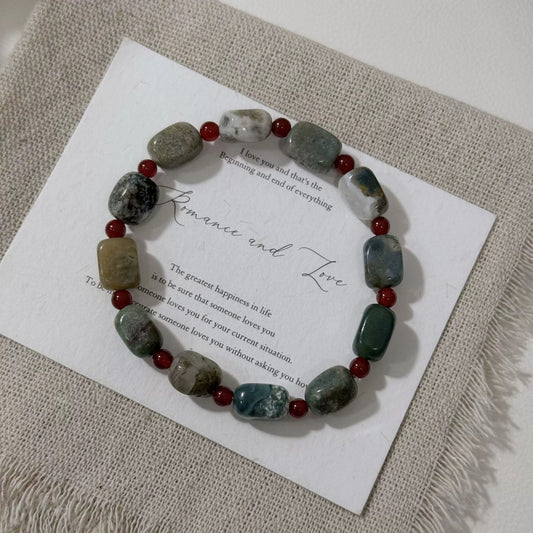
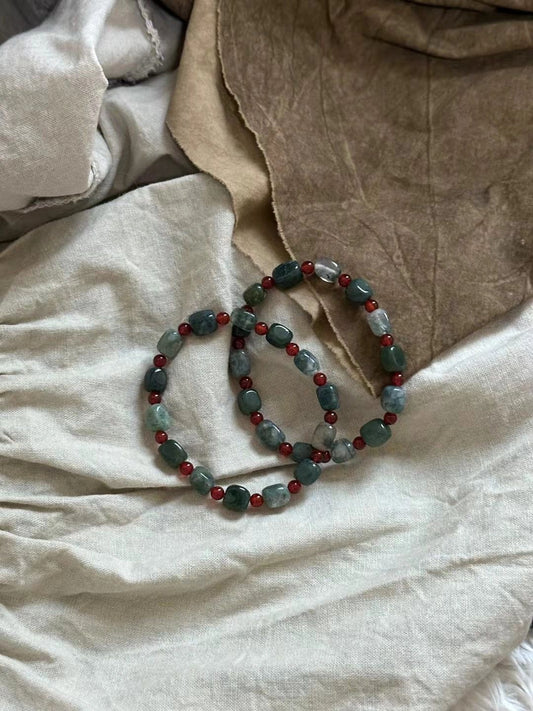
For this reason, Fire Mountain Gems advises adding a bit of extra length when beads are large, and says an average wrist needs about a 7.25 to 7.5-inch stretch bracelet. Likewise, the Wire Jewelry stretch bracelet tutorial notes that the larger the beads, the longer the bracelet must be.
| Bead size | Common use | Fit tip |
|---|---|---|
| 6 mm | Slim, stackable bracelets | Standard ease works well |
| 8 mm | Most crystal and feng shui bracelets | Add the usual ½ to ¾ inch |
| 10 mm | Bold single bracelets | Add a little more length |
| 12 mm and up | Statement pieces | Size up or choose adjustable cord |
In short, if you love chunky beads, lean toward the larger size. Conversely, with small 6 mm beads you can usually stay closer to your measurement.

Bracelet size by style
Different styles also fit in different ways. Here is a quick guide to how each style changes the right bracelet size.
- Stretch bead bracelets: roll over the hand, so they sit closer to the wrist.
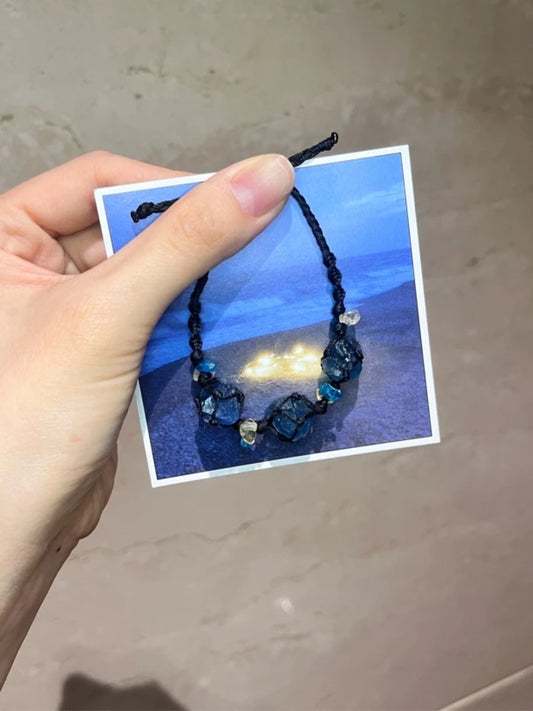
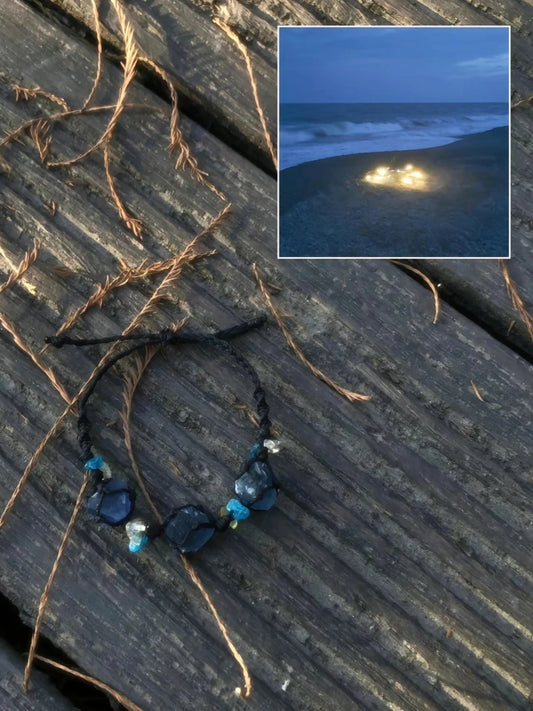
- Adjustable string or sliding knot: open and close to fit, which makes them very forgiving.
- Chain and charm bracelets: usually look best with a little drape.
- Cuffs and bangles: as Tiffany notes, these fit snugly, while link bracelets fit slightly loosely.
Also, think about how you wear your jewelry. If you stack several bracelets, each one takes up a little room. Therefore, a stack often feels better when every piece has a touch more ease.

Common bracelet size mistakes
Most bracelet size problems come from a few simple slips. Here is what to avoid.
- Using stretchy string: it reads small.
- Pulling the tape tight: as a result, the bracelet will pinch.
- Forgetting the ease: ordering your wrist number gives a very tight fit.
- Measuring the wrong wrist: left and right can differ slightly.
- Measuring across a flat bracelet: instead, measure the full length end to end.
Also note that some sellers list the wrist size while others list the bracelet length. For example, MedicAlert asks you to add ease yourself, whereas some custom makers ask for your snug wrist number and add the ease for you. So always read the label on the size chart.
Choosing a bracelet size for a gift
Buying for someone else? Then picking a bracelet size is harder, but you still have a few smart options.
- Borrow a bracelet: measure one that already fits them well.
- Use the average: a 7-inch size fits many adult wrists.
- Choose adjustable: sliding knots and string styles fit almost everyone.
- Ask a friend: a family member may know their size.
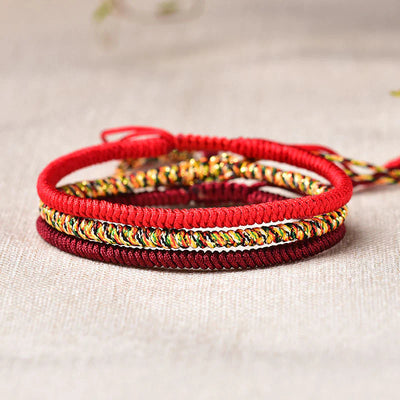
Above all, an adjustable red string or Tibetan knot bracelet removes the guesswork. That is why these styles are popular gifts for birthdays and the Lunar New Year.
When a bracelet does not fit
Even with careful measuring, a new bracelet size may feel slightly off. Fortunately, there are easy fixes.
- Too tight bead bracelet: a jeweler can restring it with one or two extra beads.
- Too loose bead bracelet: similarly, removing a bead shortens it.
- Chain bracelet: an extender chain or link removal can help.
- String bracelet: simply slide the knot to adjust.
Also check the elastic over time. Stretch cord loosens with daily wear, so a bracelet that fit perfectly at first may need restringing after a year or two.
Bracelet size for men, women and kids
Average wrists differ between groups, so typical lengths differ too. As mentioned above, Brilliant Earth puts the average women's bracelet size at about 6.5 to 7 inches and the men's at about 7.5 inches. However, plenty of people fall outside these ranges, so measuring is still the best plan.
For men, a slightly looser fit is common, especially with larger beads. Therefore, many men choose 10 mm beads and add a little more ease than usual. In contrast, women who like slim stacks often prefer 6 mm or 8 mm beads with a closer fit.
For children, a smaller bracelet size is needed, and wrists grow quickly. So adjustable string styles are the most practical choice for kids. Also, keep small beads and charms away from very young children, since small parts can be a choking hazard.
Is a bracelet size the same in every shop?
Not always. For example, some brands use letters such as S, M and L, while others list inches or centimeters. In addition, a few luxury brands use their own charts. That is why it helps to know your wrist measurement and your preferred ease, rather than just one bracelet size label.
Which wrist to measure for bracelet size
Measure the wrist you will wear the bracelet on. As MedicAlert points out, your two wrists can be slightly different sizes. In addition, many people find their dominant wrist is a little larger.
In feng shui custom, wealth bracelets such as Pixiu are often worn on the left wrist, the "receiving" hand. So if you follow that tradition, measure your left wrist. For more on this, read our guides on how to wear a Pixiu bracelet and the red string bracelet meaning.
Does wrist size change during the day?
Yes, a little. For example, heat, exercise and salty meals can make wrists slightly fuller. Because of this, many people measure in the afternoon, when the wrist is at its usual size. Comfort ease also helps cover these small changes.

Quick checklist before you order
Finally, run through this short bracelet size list before you buy.
- First, I measured the wrist I will wear it on.
- Second, I used a non-stretch tape or string.
- Third, I added the right ease for the style.
- Next, I checked whether the chart lists wrist or bracelet length.
- Lastly, I sized up if I was between two sizes.
With these steps, finding the right fit becomes quick and stress-free. As a result, your bracelet stays comfortable and secure every day.
Find a bracelet that fits
Check our bracelet size chart, then browse adjustable styles such as the Tibetan Handmade Knot Bracelet and the Tibetan Red String Bracelet. If you are unsure, message us your wrist measurement and we will help you choose.
Key Terms Explained
- Wrist circumference: The distance around your wrist where the bracelet will sit.
- Ease: The extra length added to your wrist measurement so a bracelet can move comfortably.
- Bracelet length: The finished end-to-end length of a bracelet, usually what a size chart lists.
- Stretch bracelet: A bead bracelet strung on elastic cord that rolls over the hand.
- Sliding knot: An adjustable closure on string bracelets that opens and closes to fit.
Frequently Asked Questions
How do I find my bracelet size?
Measure your wrist with a soft tape or non-stretch string just below the wrist bone, then add about ½ to 1 inch of ease depending on how loose you like it. Compare the result with the seller's size chart.
What is the standard bracelet size?
A 7-inch bracelet is widely considered standard. However, wrists vary, so your own measurement is the best guide.
Should I size up or down?
If you are between two sizes, most jewelers suggest choosing the larger size for comfort.
Do big beads change the fit?
Yes. Larger beads make a bracelet feel tighter at the same length, so add a little extra length or choose an adjustable cord.
What if I do not know someone's wrist size?
Choose an adjustable string or sliding-knot bracelet, or measure a bracelet they already wear. A 7-inch size fits many adults.
References
- Jewelers Mutual – How to measure bracelet size
- MedicAlert Foundation – Bracelet sizing
- Brilliant Earth – How to measure bracelet size
- QVC – Find your wrist size (PDF)
- Mint & Lily – How to measure your wrist for a bracelet
- Jewelers Mutual – How should a bracelet fit?
- Monica Vinader – Bracelet size guide
- MedicAlert Foundation – How to measure wrists
- Fire Mountain Gems – Stretch bracelet length Q&A
- Tiffany & Co. – Bracelet size guide
- Fire Mountain Gems – Stretch bracelet sizing Q&A
- Bulgari – Bracelet size guide
- Wire Jewelry – Stretch bracelet tutorial
Meanings described here are cultural traditions and personal symbolism. Jewelry is not a substitute for medical, financial or professional advice, and no result is guaranteed.
Which bracelet is right for you? Picks from this guide
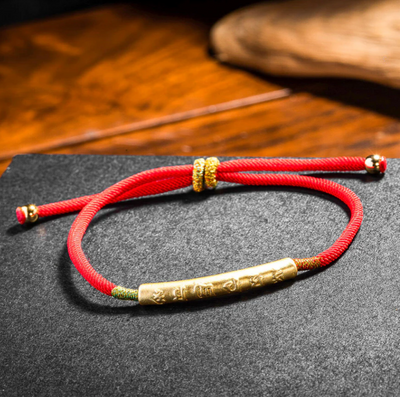 Tibetan Red String Bracelet-Six-Character Engraved Mantra Prayer Buddhist Mascot
Sample Image Gallery