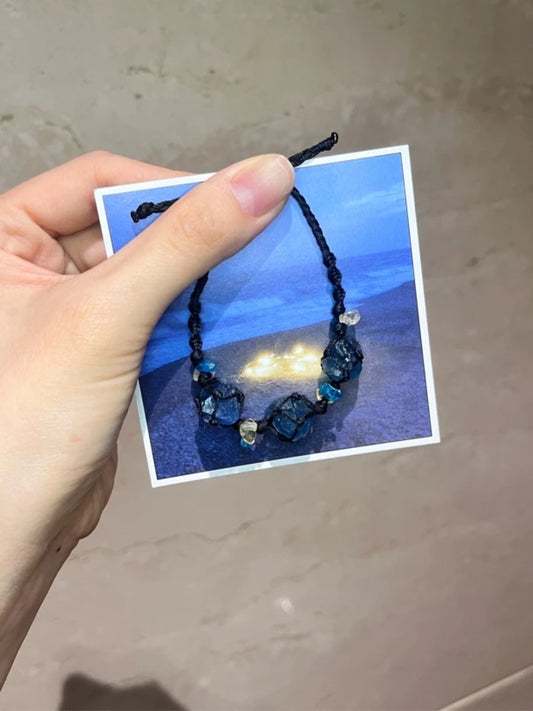
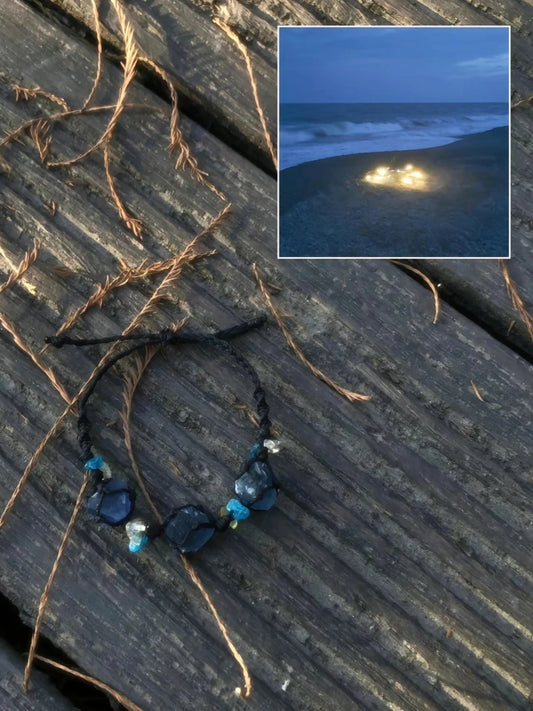
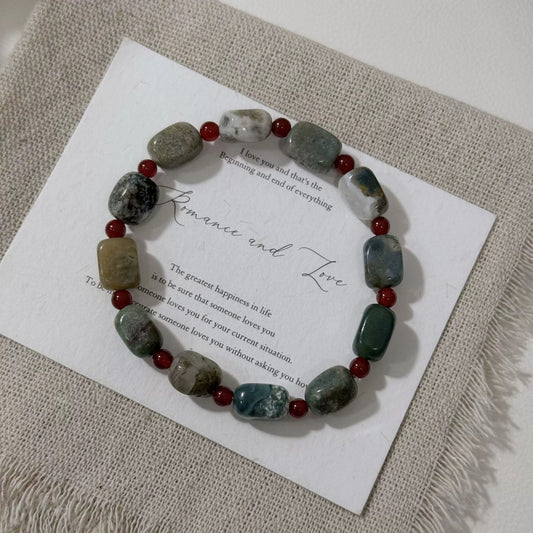
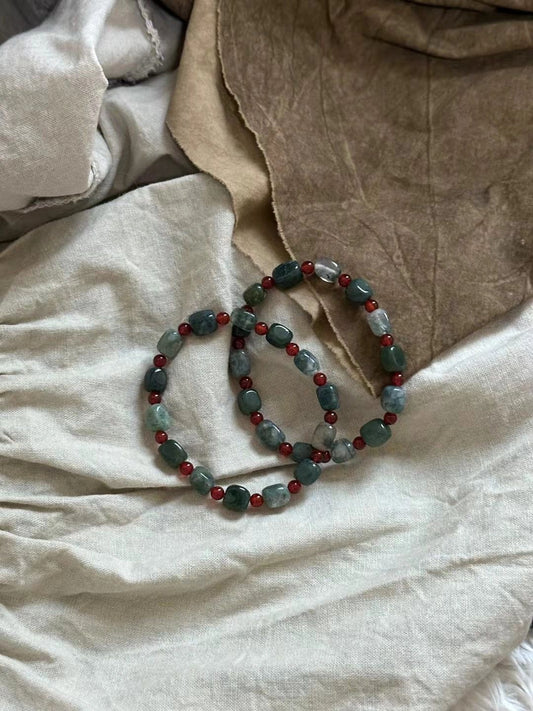
How to Choose a Feng Shui Bracelet: Intention, Symbol and Size

Key takeaways
- To choose a feng shui bracelet, start with one intention: wealth, protection, luck, love or balance.
- Then pick the symbol tradition links to that goal, such as Pixiu for wealth or a red string for luck.
- Five-element colors are optional. Some people match their element; others simply choose a stone they love.
- Custom says to wear a Pixiu on the left wrist with its head facing out, and not to let others play with it.
- Feng shui meanings are cultural traditions. Treat the bracelet as a reminder, not a guarantee.
To choose a feng shui bracelet, decide on one intention, pick the symbol tradition links to it, choose a material and color you like, and get the right size. That is the whole method. Everything else in this guide simply helps you make each choice with more confidence.
Feng shui means "wind and water". According to National Geographic, it is an ancient Chinese art of arranging space to bring harmony and balance. Feng shui bracelets carry that idea onto the wrist. So in this guide, you will learn the common symbols, the five-element colors, the wearing customs and the mistakes to avoid.
Table of contents
- What a feng shui bracelet is
- 1. Set one intention
- 2. Pick the symbol
- Symbol table
- 3. Choose material and color
- Five-element colors
- 4. Get the size right
- 5. Learn the wearing customs
- 6. Check quality
- Mistakes to avoid
- For men and women
- Care
- Budget
- Checklist
- Who it suits
- Frequently Asked Questions
- References
What a feng shui bracelet is
A feng shui bracelet is a bracelet that carries a traditional Chinese symbol of good fortune. For example, the symbol may be a carved charm, such as a Pixiu. It may also be a set of old coins, a red string or a stone with a lucky color.
In feng shui thinking, objects and colors are linked to "qi", a word often translated as energy. So people wear these bracelets as a personal charm. However, it is important to be clear. These are cultural beliefs, not scientific facts. Our article on whether feng shui bracelets work covers this honestly.
With that in mind, here are six steps to choose a feng shui bracelet that fits your goal and your style.
Step 1: Set one intention before you choose a feng shui bracelet
First, start with one clear goal before you choose a feng shui bracelet. After all, a bracelet with one main meaning is easier to wear and to explain. Also, many feng shui teachers advise against mixing too many symbols at once.
The most common intentions are:
- Wealth: for work, business or saving money.
- Protection: for travel, a hard year or a new home.
- Luck: for exams, interviews or a fresh start.
- Love and harmony: for a couple or for family peace.
- Balance: for a calmer, steadier mood.
Next, write your goal down in one short line. For example: "I want a reminder to save money this year." Then let that line guide each later choice.
Step 2: Pick the symbol for your feng shui bracelet
Next, match your goal to a symbol. In fact, each one has its own story.
Pixiu for wealth
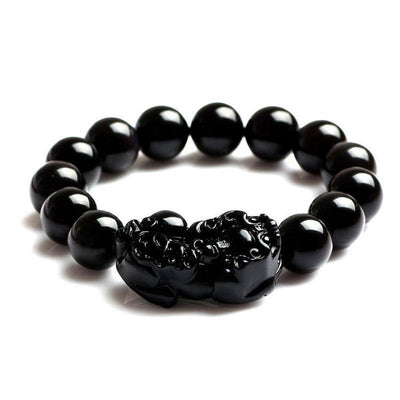
Pixiu is a winged, lion-like creature from Chinese myth. Wikipedia describes it as an auspicious creature said to draw wealth from all directions. Also, folk stories say it eats gold and silver but never lets wealth out. As a result, it became a symbol for gathering and keeping money.
In addition, Pixiu is a guardian. China Daily notes that Pixiu is said to protect its master from evil and bring wealth. It also notes that carrying a small Pixiu is a common custom in southern China.

Coins for prosperity
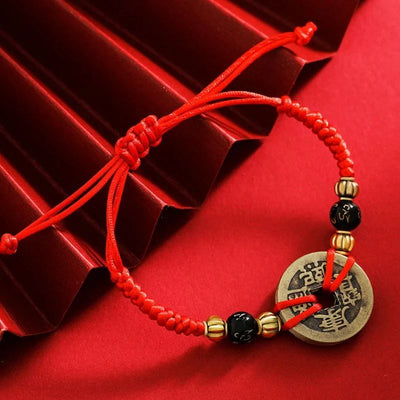
Round coins with a square hole are classic feng shui charms. The "Five Emperor Coins" carry the names of five Qing emperors: Shunzhi, Kangxi, Yongzheng, Qianlong and Jiaqing. According to Wikipedia's article on cash coins in feng shui, these sets are among the most common feng shui coin charms. That is because their era was seen as stable and prosperous.

Red string and red beads for luck and protection
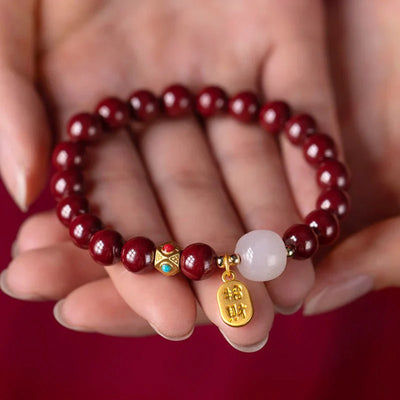
Red, by contrast, is the color of luck and joy in Chinese culture. So a red string bracelet is a simple, light charm for good fortune. Red beads, such as cinnabar-red beads, are also linked to protection. Read more in our red string bracelet guide.
Other symbols
- Wu lou (gourd): a traditional symbol of health and protection.
- Jade: linked to harmony, virtue and long life.
- Dragon and phoenix: a pair often chosen by couples.
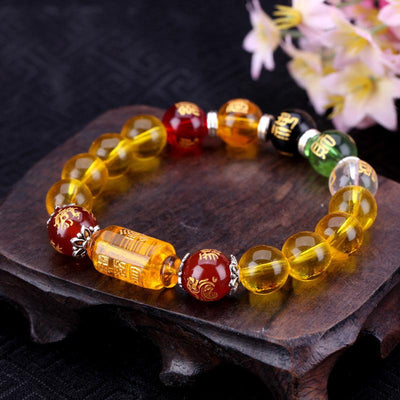
- Mantra beads: Tibetan Buddhist blessings, such as Om Mani Padme Hum.
Symbol table: how to choose a feng shui bracelet by goal
In short, this table sums up the most common pairings. Use it as a quick map when you choose a feng shui bracelet.
| Intention | Traditional symbol | Common materials | Example |
|---|---|---|---|
| Wealth | Pixiu, coins, ingots | Obsidian, citrine, gold-tone metal | Black Obsidian Pixiu |
| Protection | Pixiu, mantras, red beads | Obsidian, cinnabar-red beads | Red Cinnabar Bracelet |
| Luck | Red string, lucky knots, coins | Cord, cinnabar-red beads | Lucky Red String |
| Love | Dragon and phoenix, red string | Rose quartz, red cord | Couples Red String Set |
| Balance | Five elements, jade, gourd | Mixed stones, jade | Five Elements Pixiu |
Step 3: Choose material and color
Now pick what the bracelet is made of. In general, most feng shui bracelets use one of three bases:
- Stone beads: obsidian, citrine, jade, tiger's eye and more.
- Cord: red or colored string, often hand-knotted and adjustable.
- Metal: sterling silver or gold-tone charms and coins.
However, each has trade-offs. For example, black obsidian is volcanic glass with a hardness of about 5.5, according to geology.com. That makes it easy to carve but also easy to scratch. Meanwhile, cord is light and comfy, yet it wears faster. Finally, metal is durable but adds weight.

Five-element colors when you choose a feng shui bracelet
Many people use the five elements, or Wu Xing, to pick a color. The Internet Encyclopedia of Philosophy explains that the five phases are wood, fire, earth, metal and water. Also, each one links to colors, seasons and directions.
| Element | Color | Example stones | Supports (generating cycle) |
|---|---|---|---|
| Wood | Green | Jade, green aventurine | Fire |
| Fire | Red | Red agate, cinnabar-red beads | Earth |
| Earth | Yellow, brown | Citrine, tiger's eye | Metal |
| Metal | White, gold | White jade, clear quartz, silver | Water |
| Water | Black, blue | Obsidian, blue stones | Wood |
In particular, the generating cycle runs in a loop: wood feeds fire, fire makes earth, earth bears metal, metal collects water, and water nourishes wood. So some people choose a color that supports their own element. For example, a "water" person might wear metal tones.
That said, the element method is optional. If you do not know your element, simply choose the stone you love. Our five elements guide explains how to find yours.

Step 4: Get the size right
Above all, a good fit keeps the charm in place and the cord safe. So measure first before you choose a feng shui bracelet.
- Wrap a soft tape around your wrist, just below the bone.
- Add 1 cm for a snug fit, 1.5 cm for comfort or 2 cm for a loose fit.
- For a Pixiu charm, allow a little extra so the charm can sit flat.
If you are buying a gift and do not know the size, choose an adjustable red string or cord bracelet. Also, see our bracelet size chart for a step-by-step guide.
Step 5: Learn the wearing customs
Most feng shui bracelets also come with folk customs. You do not have to follow them. However, many people enjoy them as part of the ritual.
- Which hand: custom places a wealth bracelet, such as Pixiu, on the left wrist. The idea is that the left hand "takes in".
- Which way: the Pixiu's head usually faces outward, as if bringing wealth toward you.
- Who touches it: folk belief says not to let others play with your Pixiu.
- When to remove it: many people take it off for sleep, showers and intimate moments.
For full details, see our guide on feng shui bracelet rules and which wrist to use. If your piece is a Pixiu, read how to wear a Pixiu bracelet as well.

Step 6: Check quality before you choose a feng shui bracelet
Finally, check the listing. After all, a clear listing protects you from surprises. Look for these points before you choose a feng shui bracelet:
- The stone is named, such as "black obsidian" or "citrine".
- Any treatment is stated. For example, most citrine on the market is heat-treated amethyst, according to the GIA.
- The metal is named, such as "925 sterling silver" or "gold-plated alloy".
- Also, photos show the real piece in daylight.
- The store explains shipping and returns.
Also, read reviews from real buyers when they exist. They often mention fit and color, which photos can miss.
Common mistakes when you choose a feng shui bracelet
- Stacking too many symbols. Instead, pick one main intention and one main symbol.
- Buying only on price. Very cheap pieces often skip the material name.
- Ignoring comfort. A heavy charm that annoys you will end up in a drawer.
- Getting the wrong size. Measure first; it takes one minute.
- Expecting guaranteed results. In short, see it as a meaningful reminder.
Feng shui bracelets for men and women
Feng shui symbols have no gender. Still, style choices differ, so it helps to think about who will wear the piece when you choose a feng shui bracelet.
- For men: many prefer matte black obsidian, tiger's eye or larger 10–12 mm beads. A single Pixiu charm keeps the look simple.
- For women: many prefer 6–8 mm beads, rose quartz, jade or a fine red string with a small silver charm.
- For anyone: an adjustable cord bracelet fits most wrists and suits both work and weekend outfits.
In the end, though, personal taste wins. So if a man loves pink rose quartz, that is the right choice for him.
How to care for a feng shui bracelet
Good care keeps your bracelet looking new. Also, many people see care as part of the ritual. Here is a simple routine for when you choose a feng shui bracelet for daily wear:
- Take it off before showers, swimming, the gym and sleep.
- Wipe it with a soft, dry cloth at the end of the day.
- Now and then, rinse stone beads in lukewarm water and dry them fully.
- Keep it away from perfume, lotion and cleaning sprays.
- Store it in a soft pouch, apart from harder jewelry.
In folk practice, people also "cleanse" charms with moonlight or incense smoke. That is a symbolic step, so it is optional. However, avoid salt water and harsh chemicals, because they can damage cords and some stones. Our guide on how to cleanse a Pixiu covers the gentle methods.
How much to spend
You do not need to spend much. For example, a red string or a simple bead strand makes a fine first piece. Mid-range bracelets add better stones or sterling silver charms. Premium pieces use carved jade, solid silver or gold-plated details.
So set a budget first, then choose a feng shui bracelet within it. In short, a higher price should buy something you can see, such as a named stone, better metal or finer carving.
Quick checklist to choose a feng shui bracelet
Before you buy, run through this short list. It takes one minute, yet it prevents most regrets.
- I know my one main intention.
- The symbol matches that intention.
- I like the color, or it fits my element.
- I measured my wrist and added 1–2 cm.
- The listing names the stone and metal.
- The store explains returns.
If you can tick every line, you are ready to choose a feng shui bracelet with confidence. Otherwise, go back to the step you skipped. In short, a calm, clear choice is part of the meaning itself.
Who should choose a feng shui bracelet
Of course, anyone can wear one. However, some people find them especially meaningful:
- Business owners often choose Pixiu or coins as a prosperity reminder.
- Travelers often choose protective stones or mantra beads.
- People in their zodiac year often wear red, a long Chinese custom.
- Couples often pick matching red strings or dragon-and-phoenix sets.
In addition, feng shui bracelets make thoughtful gifts for a new job, a new business or Lunar New Year. Also, include a short note on the symbol's meaning. That small touch turns a bracelet into a story.

For the meaning of each symbol, read our feng shui bracelet meaning guide. For history and taboos, see our complete feng shui bracelet guide.
Find your feng shui bracelet
Explore the Black Obsidian Pixiu Bracelet, the Five Emperor Coins Bracelet and all feng shui bracelets. Prefer a set? See our bundle sets.
Key Terms Explained
- Feng shui: "Wind and water", the Chinese art of arranging space for harmony.
- Qi: A traditional idea of vital energy that flows through people and places.
- Pixiu: A winged mythical creature linked to gathering and guarding wealth.
- Wu Xing: The five phases: wood, fire, earth, metal and water.
- Five Emperor Coins: Five Qing-era coins strung together as a prosperity charm.
Frequently Asked Questions
What is the first step to choose a feng shui bracelet?
Pick one intention, such as wealth, protection or luck. Then choose the symbol tradition links to that goal.
Which hand should I wear a feng shui bracelet on?
Custom favors the left hand for wealth symbols like Pixiu. For other bracelets, wear whichever hand is comfortable.
Can I choose a feng shui bracelet by my zodiac sign?
Yes. Some people pick a color that supports their five-element sign, or wear red in their zodiac year. Both are optional customs.
Can I wear a feng shui bracelet every day?
Yes. Many people wear one daily. Take it off for showers, swimming and sleep to protect the cord and stones.
Is it okay to buy a feng shui bracelet for myself?
Yes. Some customs prefer gifts, but buying your own is common and perfectly fine.
References
- National Geographic Education – Feng shui
- Wikipedia – Pixiu
- Britannica – Feng shui
- China Daily – The pixiu in Chinese mythology
- Internet Encyclopedia of Philosophy – Wuxing
- Wikipedia – Cash coins in feng shui
- New World Encyclopedia – Wu Xing
- Macao Post – Auspicious animals stamp issue (Pixiu)
- Geology.com – Obsidian
- Wikipedia – Feng shui
- GIA – Citrine description
- EBSCO Research Starters – Feng shui
Meanings described here are cultural traditions and personal symbolism. Jewelry is not a substitute for medical, financial or professional advice, and no result is guaranteed.
Which bracelet is right for you? Picks from this guide
Sample Image Gallery