Jade vs Jadeite: What Is the Difference? A Clear Buyer’s Guide

Key takeaways
- Jade is an umbrella name for two different minerals: jadeite and nephrite.
- In the jade vs jadeite question, jadeite is the rarer, slightly harder and denser stone. Nephrite is more common and very tough.
- Both are tough enough for daily bracelets, but jadeite tends to look glassier and nephrite looks oily or waxy.
- Treatment matters more than the name. Ask whether a stone is untreated, bleached and filled, or dyed.
- For a meaningful gift, either stone works. Choose by look, feel, budget and honest disclosure.
Jade vs jadeite is a common point of confusion, because jadeite is one of the two minerals that we call jade. The other is nephrite. So all jadeite is jade, but not all jade is jadeite. According to the Gemological Institute of America (GIA), "jade" is a trade name for nephrite, jadeite and, in some cases, green omphacite.
This guide explains the jade vs jadeite difference in plain words. First, you will see how the two stones differ in hardness, weight, luster and color. Next, you will learn where each comes from and how treatments change value. Finally, you get simple checks to use before you buy a jade bracelet.
Table of contents
- What jade really means
- Jade vs jadeite: the short answer
- Jade vs jadeite comparison table
- Hardness, toughness and weight
- Luster, color and translucency
- Where each stone comes from
- Treatments: A, B and C jade
- What drives price
- Stones sold as "jade" that are not
- How to choose between them
- Care tips for both types
- Cultural meaning in China
- Frequently Asked Questions
- References
What jade really means
The word jade covers two separate minerals. They look alike, so for centuries people used one name for both. However, they have different chemistry and structure.
For example, jadeite is a pyroxene mineral with the formula NaAlSi2O6. In contrast, nephrite is an amphibole made of tremolite and actinolite. The geology.com jade guide lists both as silicates, but from different mineral groups. In short, the jade vs jadeite question is really "nephrite vs jadeite".
Scientists only split the two in the 1800s. For example, the open gemology text at LibreTexts notes that nephrite has been recognized as a separate type of jade since 1863. Before that, Chinese carvers had worked nephrite for thousands of years.

Jade vs jadeite: the short answer
If you only need the headline, here it is. Jadeite is the rarer stone. It is also a little harder and heavier. Fine pieces can look almost glassy. On the other hand, nephrite is more common. It is a little softer, but it is extremely tough and has a soft, oily glow.
So the jade vs jadeite choice is not "real vs fake". Both are real jade. Instead, it is a choice between two natural materials with different looks and price ranges. Also, the label you see in a shop is only the start. Treatment and quality matter just as much.
- Pick jadeite if you want bright color, more translucency and a glassy shine.
- Go for nephrite if you want a calm, buttery look, deep greens or creamy whites, and a lower price.
- Choose either for a gift. Both carry the same cultural meaning in Chinese tradition.
Jade vs jadeite comparison table
The table below puts the jade vs jadeite facts side by side. The numbers come from the GIA jade entry and university gem notes. Here "jade" in the first column means nephrite, the other common jade.
| Property | Nephrite (common jade) | Jadeite |
|---|---|---|
| Mineral group | Amphibole (tremolite–actinolite) | Pyroxene |
| Mohs hardness | 6 to 6.5 | 6.5 to 7 |
| Specific gravity | About 2.95 | About 3.34 |
| Refractive index | 1.606 to 1.632 | 1.666 to 1.680 |
| Typical luster | Oily to waxy | Glassy (vitreous) to greasy |
| Common colors | Spinach green, white, gray, black | Green, white, lavender, yellow, orange, black |
| Rarity | More common | Rarer, especially fine green |
| Famous sources | Xinjiang (Hetian), Canada, New Zealand | Myanmar (Burma), Guatemala, Japan |
In particular, two rows matter most for shoppers. First, density: jadeite feels heavier in the hand for the same size. Second, luster: jadeite tends to shine like glass, while nephrite glows more softly. The University of Texas gem notes give the same hardness ranges and call both materials extremely tough.
Hardness, toughness and weight
Hardness means how well a stone resists scratches. On the Mohs scale, jadeite rates 6.5 to 7 and nephrite rates 6 to 6.5. That is a small gap. So in practice, both can be scratched by quartz dust over time.
Toughness, however, is different. It means how well a stone resists chips and breaks. Here both jade types shine. The GIA says neither stone is unusually hard, but both are extremely tough. That is why Neolithic people made knives and axe heads from nephrite.
So in the jade vs jadeite debate, durability is close to a tie. A bead bracelet in either stone can last for decades. Still, a hard knock on stone floors can crack any bead, so care matters.
Can you feel the jade vs jadeite weight difference?
Sometimes. Jadeite has a specific gravity of about 3.34, while nephrite sits near 2.95. That means a jadeite bead is roughly 13% heavier than a nephrite bead of the same size. You may notice this with two similar bangles. However, with small beads the gap is hard to feel, so do not rely on weight alone.

Luster, color and translucency
Looks are where most people notice the jade vs jadeite difference. Nephrite is made of tiny fibers that lock together. As a result, polished nephrite has an oily or waxy shine. Jadeite is made of small interlocking grains. Fine jadeite can take a glassy polish and look almost see-through.
Next, color gives a clue. Nephrite often shows deep spinach green, mutton-fat white, gray or black. Jadeite comes in a wider range. The GIA lists green, white, lavender, yellow, orange and black, and notes that the most desired jadeite color is one very specific green.
That top color has a name. The finest jadeite, almost transparent with vivid emerald green, is called "imperial jade". The University of Texas notes explain that a small amount of chromium causes this color. Because imperial jade is very rare, most green jadeite on the market is paler or less even.
Jade vs jadeite translucency
Translucency means how much light passes through. The GIA says the best jadeite is semitransparent, so text seen through it looks slightly blurred. Most nephrite is more opaque. Hold a bead to a window or phone light. If light glows through evenly, it may be fine jadeite, but treated stones can look similar, so keep reading.
Where each stone comes from
Origin also shapes the jade vs jadeite story. China's famous nephrite comes from Hetian (Hotan) in Xinjiang. Chinese artisans carved this stone long before jadeite arrived. The GIA even notes that the Chinese character for jade is one of the oldest in written Chinese.
Jadeite, by contrast, entered Chinese taste much later, mainly in the Qing dynasty, when stones from Burma reached the court. Even today, Myanmar is still the main source of fine jadeite. Other sources include Guatemala and Japan. Nephrite also comes from Canada, New Zealand, Russia and other regions.
For U.S. buyers, there is one more point. According to the GIA jade buyer's guide, jadeite from Myanmar is no longer banned in the United States as of 2016.

Treatments: A, B and C jade
Here is the most important part of any jade vs jadeite purchase. Treatment can change value far more than the mineral name. Jade may be dyed, bleached, filled with polymer, coated or heated. The GIA jade care guide lists all of these.
The jadeite trade uses simple letter grades:
| Grade | What it means | What to ask |
|---|---|---|
| Type A | Natural color, no bleach or polymer. Only surface wax. | "Is it untreated Type A?" |
| Type B | Bleached with acid, then filled with polymer resin. | "Has it been bleached or impregnated?" |
| Type C | Dyed to add or improve color. | "Is the color natural or dyed?" |
| Type B+C | Bleached, filled and dyed. | "Can you share a lab report?" |
In general, these letters apply to jadeite. Nephrite is more often sold with simple disclosure, such as "dyed" or "natural color". Either way, an honest seller should tell you. For costly pieces, a lab report from a recognized gem lab is the safest choice.
Why treatment matters for daily wear
Of course, treated stones are not "bad". However, they need gentler care. Polymer can weaken with heat or harsh chemicals, and dye can fade. That is why the GIA suggests warm, soapy water for all jade, since you may not know how a stone was treated.
What drives price in jade vs jadeite
Price is where the jade vs jadeite gap can feel huge. However, the mineral name is only one factor. In fact, four other factors usually matter more.
- Color: even, bright green costs the most. Also, lavender jadeite can be pricey.
- Translucency: the more light passes through, the higher the value.
- Texture: fine, smooth grain beats coarse, grainy stone.
- Treatment: untreated stone is worth more than bleached, filled or dyed stone.
So a fine, untreated nephrite can cost more than a dyed jadeite. For this reason, compare like with like. For example, compare two untreated green bead bracelets of the same size, not a nephrite bead with a jadeite bangle.
Also, size and cut change price. A bangle carved from one block uses far more rough stone than a bead strand. That is why bangles often cost more, even in the same material. Finally, carving skill adds value, especially for pendants with fine detail.
Stones sold as "jade" that are not
Some stones carry the word jade but are neither nephrite nor jadeite. Geology.com covers several of these trade names. For example, "Malaysia jade" is usually dyed quartz. "New jade" is often serpentine. "Indian jade" usually means green aventurine.
In fact, these stones can be pretty and affordable. Still, they should be named honestly. So when you compare jade vs jadeite listings, read the material line closely. If a listing only says "jade", ask which mineral it is.
- Serpentine: softer, often yellow-green, sold as "new jade".
- Dyed quartz: bright, even color, sold as "Malaysia jade".
- Aventurine: green quartz with tiny sparkles, sold as "Indian jade".
- Glass: may show bubbles under a loupe.

How to choose between them
Now you know the jade vs jadeite facts. So how do you choose? Use the five steps below. They work for bracelets, pendants and bangles.
- Decide the look you love. Do you want a glassy, bright stone or a soft, calm glow? That alone often settles jade vs jadeite.
- Check the material line. A good listing names nephrite, jadeite or another stone.
- Ask about treatment. Use the A, B and C terms above.
- Check fit and weight. For beads, measure your wrist and add 1–2 cm. For bangles, measure the widest part of your hand.
- Buy from a clear seller. Look for a return window and honest photos in daylight.
Also think about budget. Fine jadeite can cost far more than nephrite of a similar size. However, an even-colored nephrite bracelet is still a beautiful and meaningful piece. Our guide on how to tell if a jade bracelet is real adds simple home checks.
Jade vs jadeite for a gift
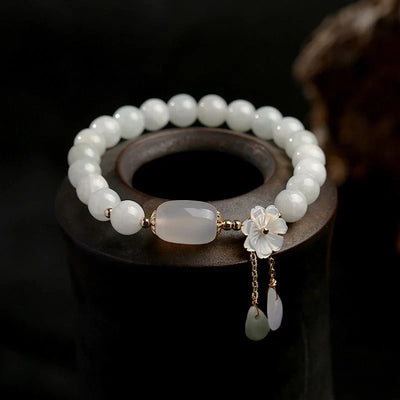
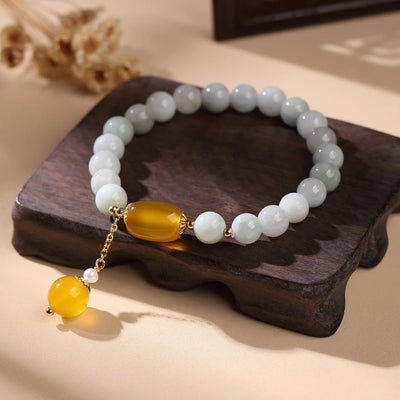
For gifts, however, the meaning is the same. In Chinese culture, jade stands for virtue, protection and long life. So pick the stone that suits the person's style. A white jade bracelet fits a calm, classic taste. A green jade bracelet suits someone who loves color.
Care tips for both types
Overall, good care keeps both stones bright for years. The rules are the same for jade vs jadeite pieces.
- Clean with warm water, mild soap and a soft cloth.
- Skip ultrasonic and steam cleaners unless the stone is untreated.
- Take bracelets off for the gym, swimming and cleaning chores.
- Store jade apart from diamonds and other hard stones to avoid scratches.
- Check the cord on bead bracelets every few months.
Because jade is tough, many people wear it every day. Indeed, an old belief says jade grows brighter with wear as skin oils polish it. Whether you believe that or not, regular, gentle wear and cleaning keep the shine.

Cultural meaning in China
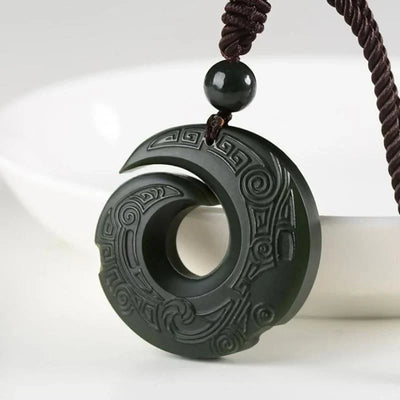
For thousands of years, jade has been the most valued stone in China. Confucian texts linked jade to virtue, such as kindness and honesty. The GIA notes that a flat jade disk with a hole, the "bi", has long stood for heaven.
Still, that meaning does not depend on the jade vs jadeite label. Most ancient Chinese jade was nephrite. Jadeite became popular much later, when the Qing court fell in love with its bright green. Today, both are worn for good fortune, protection and harmony.
So if you choose jade for meaning, either mineral is a fine choice. Pick the one you love to look at. After all, a bracelet you wear every day is a better reminder than one that stays in a box. For more ideas, see our jade bracelet meaning guide and our guide to which hand to wear jade on.
Find your jade piece
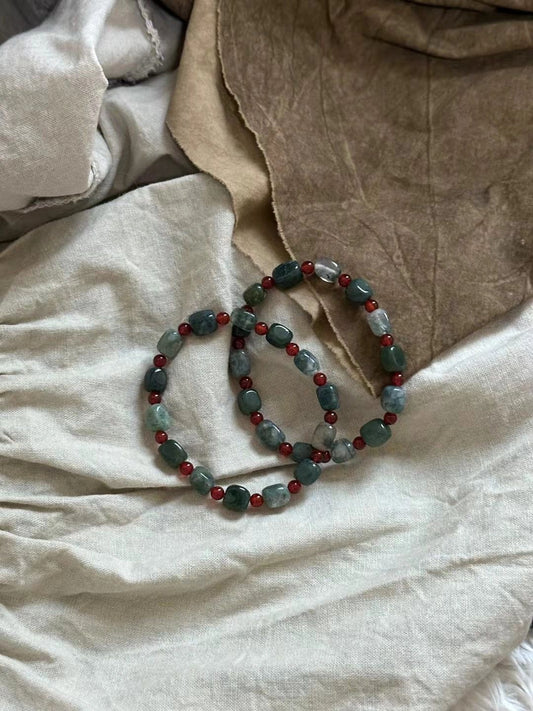
Browse green jade bead bracelets, the White Jade Longevity Bracelet and other feng shui bracelets. Each listing names its material, and you can ask us about any stone before you buy.
Key Terms Explained
- Jadeite: A sodium aluminum pyroxene. The rarer of the two jade minerals.
- Nephrite: A tough amphibole made of tremolite and actinolite. The most common jade.
- Imperial jade: Top-quality, nearly transparent jadeite with vivid emerald green color.
- Type A / B / C: Trade grades for jadeite: untreated, bleached and filled, or dyed.
- Toughness: Resistance to chipping and breaking, different from scratch hardness.
Frequently Asked Questions
Is jadeite more valuable than jade?
Jadeite is one kind of jade. Fine jadeite usually costs more than nephrite because it is rarer, but quality and treatment matter more than the name. A dyed jadeite can be worth less than fine natural nephrite.
Which is better in the jade vs jadeite choice for daily wear?
Both are excellent for daily wear because both are extremely tough. Jadeite is slightly harder; nephrite is slightly tougher in many tests. Pick by look and budget.
How can I tell jade vs jadeite at home?
Home tests are limited. Jadeite often looks glassier and feels a bit heavier, while nephrite looks oily. For certainty, ask for a lab report.
Is Hetian jade jadeite or nephrite?
Hetian jade from Xinjiang is nephrite. It is the classic jade of Chinese carving history.
Does jade vs jadeite change the meaning of a gift?
No. In Chinese tradition, both carry the same meaning of virtue, protection and good fortune.
References
- GIA – Jade gem encyclopedia
- Geology.com – What is jade? Jadeite and nephrite
- GIA – Jade gem overview and facts
- University of Texas at Austin – Jade gem notes
- GIA – Jade buying guide
- Wikipedia – Jade
- GIA – Jade care and cleaning guide
- LibreTexts Geosciences – Jadeite
- Wikipedia – Jadeite
- LibreTexts Geosciences – Nephrite
- Wikipedia – Nephrite
Meanings described here are cultural traditions and personal symbolism. Jewelry is not a substitute for medical, financial or professional advice, and no result is guaranteed.
Which bracelet is right for you? Picks from this guide

Sample Image Gallery